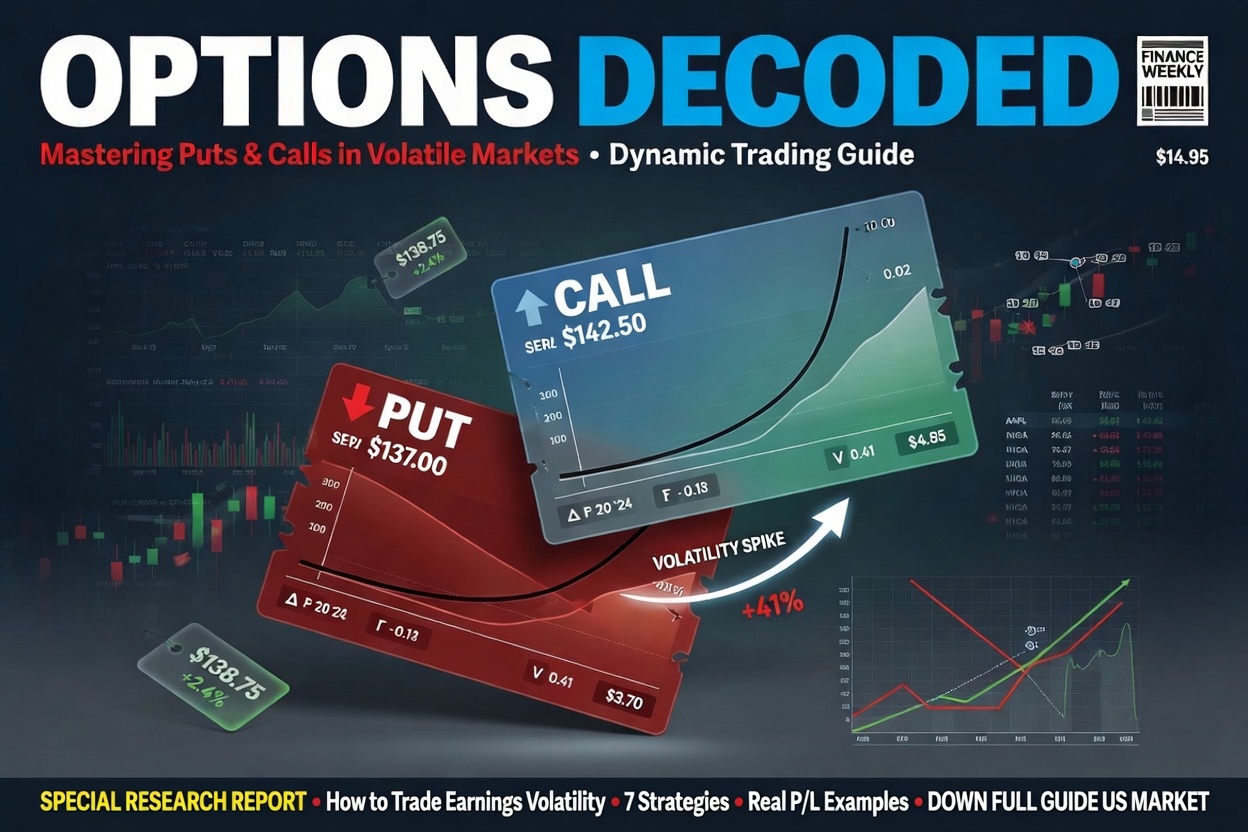
This research covers everything investors need to know about options trading in the United States. We will walk through what options contracts really are, how calls and puts work with real numerical examples, essential terminology, how to read an options chain, the Greeks explained simply, the most beginner friendly strategies including covered calls and cash secured puts, a clear step by step plan to start trading safely, how to use options for portfolio diversification with the popular SCHD ETF, major risks and how to manage them, common mistakes to avoid, and practical FAQs. Whether you want to generate monthly income, protect your stock holdings, or speculate with defined risk while building a diversified long term US portfolio, this guide gives you the full practical picture.
What Are Options Contracts in the US Market?
An options contract in the United States is a standardized financial derivative that gives the buyer the right but not the obligation to buy or sell an underlying US asset, usually one hundred shares of a listed stock, exchange traded fund, or broad market index, at a predetermined price known as the strike price by a specific date known as the expiration date. These contracts are traded on regulated US exchanges including the Chicago Board Options Exchange and are cleared and guaranteed by the Options Clearing Corporation ensuring that every trade settles properly.
Unlike owning actual shares of a US company which represents equity ownership, options are purely contractual agreements between two parties. The buyer pays a premium to the seller who in turn takes on the obligation to fulfill the contract if exercised. Every US options contract shares several key standardized features that make the market transparent and efficient. The contract multiplier is almost always one hundred shares meaning one contract controls one hundred shares of the underlying asset. Expiration dates range from same day zero days to expiration contracts to weekly, monthly, and even longer term leaps contracts. Premiums are quoted in dollars per share so a premium of four dollars and fifty cents means a total cost of four hundred fifty dollars per contract.
US options markets remain extremely liquid particularly for blue chip stocks and major exchange traded funds. Popular underlyings such as Apple, Tesla, Nvidia, the SPY S and P 500 ETF, and the QQQ Nasdaq 100 ETF routinely see millions of contracts traded daily. This high liquidity allows beginners to enter and exit positions quickly with minimal slippage even during volatile periods driven by Federal Reserve announcements, earnings reports, or macroeconomic data releases. Understanding these core mechanics is the essential foundation for any US investor who wants to use options responsibly as part of a diversified portfolio.
Call Options versus Put Options in US Trading
There are exactly two types of options available to US investors: calls and puts. A call option gives the holder the right to buy the underlying US asset at the strike price. Investors buy calls when they expect the price of the stock or index to rise. A put option gives the holder the right to sell the underlying US asset at the strike price. Investors buy puts when they expect the price to fall or when they want to protect an existing long position in US equities.
The market outlook for calls is bullish because profitability requires the underlying price to move above the strike plus the premium paid. For puts the outlook is bearish because profitability requires the underlying price to move below the strike minus the premium paid. The maximum loss for any buyer, whether of a call or a put, is strictly limited to the premium paid no matter how far the market moves against the position. The maximum gain for a call buyer is theoretically unlimited as the stock price can rise indefinitely while the maximum gain for a put buyer is substantial as the stock price can theoretically fall to zero. The breakeven price for a call is the strike price plus the premium paid and for a put it is the strike price minus the premium paid.
These fundamental differences allow US investors to express virtually any market view with controlled or defined risk depending on whether they buy or sell the contracts. The table below provides a clear side by side comparison that every beginner should study carefully before placing their first trade on a US brokerage platform.
| Feature | Call Option | Put Option |
|---|---|---|
| Market Outlook | Bullish (price expected to rise) | Bearish (price expected to fall) or hedge |
| Right Granted | Buy underlying at strike | Sell underlying at strike |
| Max Loss for Buyer | Premium paid | Premium paid |
| Max Gain for Buyer | Unlimited | Substantial (stock to zero) |
| Breakeven | Strike plus premium | Strike minus premium |
Real World Example: Call Option on Apple
Apple trades at 220 dollars. You buy one June 225 call for a 4.80 premium for a total of 480 dollars. If Apple rises to 245 dollars at expiration the call is worth 20 dollars intrinsic value. You sell for 2,000 dollars and net 1,520 dollars profit or 316 percent return on the capital risked compared with only 11 percent if you had bought one hundred shares outright. This is the power of defined risk leverage US investors use every day.
Essential Options Trading Terminology for US Investors
Mastering the core terminology is non negotiable before you place your first trade on any US brokerage platform. The strike price is the fixed price level at which the option allows you to buy or sell the underlying asset. Moneyness terms such as in the money, at the money, and out of the money tell you how the current market price of the US stock or index compares to the strike price and whether the option already contains intrinsic value. The expiration date marks the final day the option can be exercised or traded after which it expires worthless.
The premium is the current market price of the option itself expressed per share. Intrinsic value represents the immediate profit if exercised now and applies only to in the money options. Time value also called extrinsic value reflects the additional amount buyers are willing to pay because of the remaining time until expiration and the potential for favorable price movement. This time value erodes every day a phenomenon known as time decay or theta.
Exercise is the act of using your right to buy or sell the underlying shares while assignment occurs when you are the seller and the buyer chooses to exercise forcing you to fulfill the contract according to US clearing rules.
In the US market the overwhelming majority of retail traders close their options positions before expiration rather than taking or making delivery of shares. This practice avoids unnecessary transaction costs and share settlement complications. Internalizing this vocabulary will allow you to read options chains understand broker platforms and communicate effectively with other US traders as you build experience.
How Options Trading Actually Works with Realistic Examples
When you buy a US option you pay the full premium upfront in cash. Your risk is limited to that amount while your potential reward can be substantial especially with call options. When you sell an option you collect the premium immediately but you take on the obligation to deliver or purchase the underlying asset if the option is exercised which is why naked selling is considered high risk for beginners.
Consider a realistic long call trade on Apple. Apple is trading at 220 dollars. You purchase one June 225 call for a premium of 4.80 per share for a total debit of 480 dollars. By expiration if Apple has risen to 245 dollars the call is worth 20 dollars intrinsic value. You close the position for a gross credit of 2,000 dollars resulting in a net profit of 1,520 dollars or 316 percent return on the capital risked compared with only 11 percent gain if you had simply purchased one hundred shares of Apple outright.
Another practical example is a covered call on Microsoft. You already own one hundred shares of Microsoft trading at 415 dollars. You sell one June 420 call for a premium of 5.25 collecting 525 dollars in income. If Microsoft stays below 420 dollars at expiration you keep the full 525 dollars and your shares. If Microsoft rises above 420 dollars you are assigned and sell your shares at 420 dollars plus the 5.25 premium received for an effective sale price of 425.25 dollars. These real world style scenarios illustrate how options function in actual market conditions where implied volatility levels typical bid ask spreads and daily price swings are taken into account.
Sample US Options Chain SPY Expiration
Here is a realistic snapshot of how a portion of the SPY options chain might appear on a major US brokerage platform when the SPY ETF is trading near 580 dollars. Notice the high open interest and tight spreads around at the money strikes which are typical in the current market.
| Strike | Bid | Ask | Last | Volume | Open Interest | Implied Volatility |
|---|---|---|---|---|---|---|
| 570 | 12.40 | 12.60 | 12.55 | 8,450 | 124,300 | 18.4% |
| 575 | 9.10 | 9.30 | 9.25 | 12,780 | 189,650 | 17.9% |
| 580 | 6.25 | 6.45 | 6.35 | 31,220 | 312,400 | 17.2% |
| 585 | 3.90 | 4.10 | 4.05 | 18,910 | 145,200 | 16.8% |
| 590 | 2.15 | 2.35 | 2.28 | 9,340 | 87,500 | 16.5% |
Benefits of Options Trading for US Investors
US options trading offers American investors distinct advantages that are difficult to replicate with stocks alone. Leverage is the most obvious benefit allowing you to control one hundred shares of a US stock or exchange traded fund for a fraction of the outright purchase price freeing up capital for other portfolio allocations. Income generation is another powerful use case with strategies such as covered calls and cash secured puts creating regular premium income on holdings you already own or wish to acquire at a discount.
Hedging is equally important. Protective puts allow you to insure long term US equity positions against sudden market drops without selling the underlying shares. Flexibility is unmatched because options can be used profitably in strongly bullish bearish neutral or highly volatile market conditions. Defined risk when buying options means you always know your maximum loss in advance which helps with position sizing and emotional control.
When used thoughtfully within a diversified US portfolio options add non correlated return streams that can improve overall risk adjusted performance. Many US investors combine options with core holdings in dividend focused exchange traded funds to generate extra yield while maintaining long term growth exposure.
Using Options for Portfolio Diversification Real US Example with SCHD
Portfolio diversification is one of the most important principles in US investing and options can play a meaningful role in achieving it. By adding carefully selected options positions you introduce return profiles that behave differently from plain stock or bond holdings helping to smooth portfolio volatility over time. Protective puts on broad US indices provide downside protection during corrections while covered calls on stable dividend payers can boost income without requiring you to sell the underlying shares.
In practice many conservative US investors allocate between five and fifteen percent of their total portfolio to options strategies depending on experience level and risk tolerance. This modest allocation can meaningfully improve risk adjusted returns when combined with international equities commodities and fixed income holdings. A concrete example is the widely held Schwab US Dividend Equity ETF known as SCHD which remains a favorite among income focused American investors.
SCHD holds one hundred three positions. The top ten holdings represent a significant portion of the fund and include some of the most recognisable names in US corporate dividend history.
| Company | Ticker | Weight |
|---|---|---|
| Texas Instruments | TXN | 6.07% |
| QUALCOMM | QCOM | 5.47% |
| UnitedHealth Group | UNH | 5.45% |
| Coca Cola | KO | 4.11% |
| Chevron | CVX | 4.00% |
| Merck | MRK | 3.75% |
| ConocoPhillips | COP | 3.74% |
| Verizon | VZ | 3.67% |
| PepsiCo | PEP | 3.61% |
| Procter and Gamble | PG | 3.59% |
The annual reconstitution brought notable additions including UnitedHealth Abbott Procter and Gamble Qualcomm and Accenture while the fund reduced its previous heavy exposure to energy. The portfolio now reflects a more defensive and diversified profile. Many conservative US investors frequently sell covered calls against SCHD or its top holdings to generate additional monthly premium income while retaining exposure to high quality US dividend payers. This combination of steady dividend yield plus options premium creates a powerful income engine within an otherwise defensive equity allocation.
Basic Options Strategies for US Beginners with Realistic Examples
These four strategies form the foundation of almost every successful options portfolio. Master them before moving to advanced spreads.
Long Call Bullish Speculation with Defined Risk
Buy a call when you are strongly bullish on a US stock or ETF. Maximum loss equals premium paid. Maximum gain is unlimited. Best when you expect a sharp move higher within a specific time frame.
Long Put Bearish Speculation or Portfolio Protection
Buy a put when you are bearish or want to insure shares you already own. Same limited risk profile as a long call. Many US investors buy protective puts on their entire portfolio during uncertain times such as earnings season or Federal Reserve meetings.
Covered Call Generate Income on Stocks You Own
Own one hundred shares and sell an out of the money call against them. You collect premium income every month while slightly capping upside. This is the most popular beginner income strategy in the US market because it works in flat or mildly bullish conditions which describe most of the time.
Cash Secured Put Income While Waiting to Buy at a Discount
Sell a put and set aside enough cash to buy one hundred shares if assigned. You collect premium upfront and may acquire the stock at a lower net price. Excellent for US investors who want to own high quality names at a discount.
Step by Step How to Start Trading Options in the US
Follow this exact process used by successful US beginners. Do not skip steps.
The first step is to get approved. Open or upgrade a brokerage account with a US regulated broker such as Fidelity, Schwab, tastytrade, E TRADE, or Interactive Brokers. Apply for options trading approval. Start at Level one or two which covers covered calls and cash secured puts. Approval usually takes one to three business days.
The second step is to paper trade for thirty to ninety days. Use your broker paper trading simulator. Treat it like real money. Track every trade in a journal including entry reason, exit plan, profit and loss, and what you learned. This is the single most important step most beginners skip and the main reason they lose money later.
The third step is to research the underlying. Use your broker stock screener, fundamental data, and charts. Only trade options on US stocks or ETFs you understand and would be comfortable owning for six to twelve months.
The fourth step is to choose your strategy. Match the strategy to your market outlook and risk tolerance. Bullish equals long call or covered call. Bearish equals long put. Income equals covered call or cash secured put. Hedge equals protective put.
The fifth step is to analyze the options chain. Look at open interest, volume, bid ask spread, and implied volatility. Choose liquid strikes near at the money or slightly out of the money with thirty to sixty days to expiration for beginners.
The sixth step is to place the trade with a clear exit plan. Decide your profit target and maximum acceptable loss before you click buy or sell. Use limit orders. Set alerts on your phone.
The seventh step is to manage and review weekly. Check positions daily at first then weekly. Close or adjust early if the thesis changes. After every closed trade write down what worked and what did not. This review process is what turns beginners into consistently profitable US options traders.
Portfolio Diversification with Options Real US Example Using SCHD
Options are not just for speculation. Smart US investors use them to diversify and generate extra income on top of core holdings like the Schwab US Dividend Equity ETF known as SCHD.
SCHD is one of the most popular dividend ETFs among US investors. As of recent data it holds one hundred three high quality US companies with a focus on dividend growth and financial strength. The top ten holdings are shown in the table below.
| Company | Ticker | Weight |
|---|---|---|
| Texas Instruments | TXN | 6.07% |
| QUALCOMM | QCOM | 5.47% |
| UnitedHealth Group | UNH | 5.45% |
| Coca Cola | KO | 4.11% |
| Chevron | CVX | 4.00% |
| Merck | MRK | 3.75% |
| ConocoPhillips | COP | 3.74% |
| Verizon | VZ | 3.67% |
| PepsiCo | PEP | 3.61% |
| Procter and Gamble | PG | 3.59% |
The annual reconstitution brought notable additions including UnitedHealth Abbott Procter and Gamble Qualcomm and Accenture while the fund reduced its previous heavy exposure to energy. The portfolio now reflects a more defensive and diversified profile. Many US investors sell covered calls against SCHD or its top holdings to generate one to three percent extra monthly income on top of the ETF dividend yield all while keeping the shares for long term growth. This is a perfect example of using options to enhance diversification and income without increasing overall portfolio risk.
Reading a US Options Chain Practical Walkthrough
Every US broker shows an options chain. Focus on these columns first. Strike is the price level. Bid and Ask show what buyers are willing to pay versus what sellers want. Trade near the midpoint on liquid contracts. Volume and Open Interest higher equals better liquidity and tighter spreads. Implied Volatility higher means more expensive options great for sellers and expensive for buyers.
Always trade contracts with high open interest in the thousands and tight bid ask spreads under ten to fifteen cents on liquid names. Avoid low volume strikes as they can trap you with wide spreads.
The Option Greeks Explained Simply for Beginners
The Greeks tell you how an option price will change. You do not need to calculate them as your broker shows them but you must understand what they mean. Delta shows how much the option price moves when the stock moves one dollar. Gamma shows how fast delta changes. Theta is daily time decay the biggest enemy of option buyers. Vega is sensitivity to volatility changes. Rho is sensitivity to interest rates usually minor for short term trades.
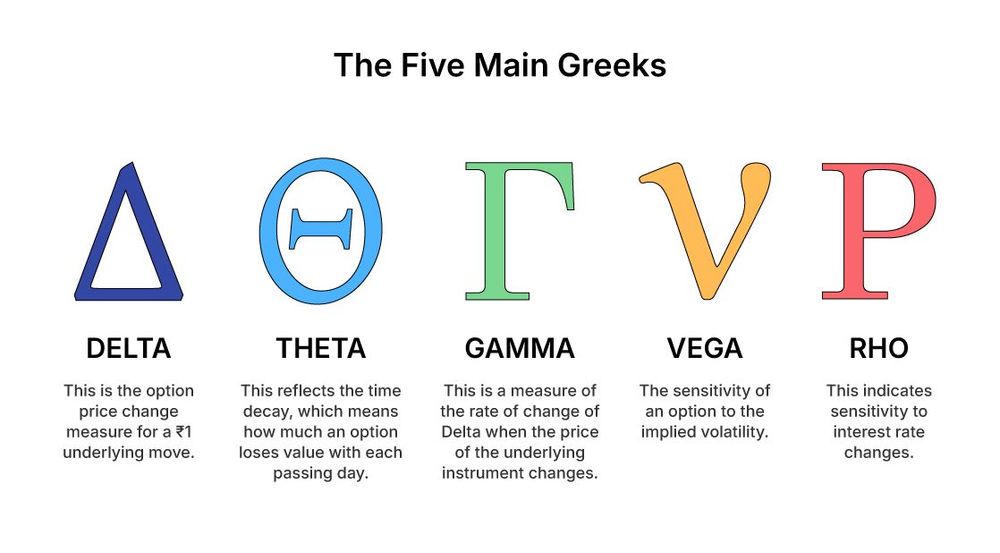
Start by watching delta and theta on every trade. They will teach you more than any textbook.
Major Risks of Options Trading and How to Manage Them
Options are high risk instruments. Over seventy percent of retail options traders lose money. The main risks are time decay theta which causes options to lose value every day fastest in the final thirty days, volatility crush where big price moves can reverse crushing option prices even if you were directionally right, unlimited risk on naked selling so never sell naked calls without proper margin and experience, assignment risk where early assignment can happen on in the money options, and liquidity risk where wide spreads on low volume contracts can cost you money.
How to manage: Paper trade first. Risk no more than one to two percent of your portfolio per trade. Always have an exit plan before you enter. Close losing trades early. Stick to liquid contracts only.
Common Mistakes US Beginners Make and How to Avoid Them
Most beginners lose money for the same reasons: trading without a written plan, chasing high volatility zero days to expiration contracts with no edge, ignoring implied volatility, over leveraging by sizing too big, holding losers too long, skipping the paper trading phase, and treating options like lottery tickets instead of a business.
Fix: Write down your thesis target and stop loss before every trade. Review every closed position in a journal. Size small. Be patient.
Frequently Asked Questions about US Options Trading
What is the difference between American and European options in the US market?
American options can be exercised any time before expiration while European options can only be exercised at expiration. Most stock options traded in the United States follow the American style.
Can you lose more than you invest in US options?
If you only buy options your maximum loss is the premium paid. If you sell naked options losses can become much larger so beginners should stick to defined risk strategies.
How much money do you need to start options trading in the US?
You can start with one thousand to five thousand dollars but ten thousand dollars or more gives you room to size properly and trade multiple positions while following the one to two percent rule.
Should beginners trade zero days to expiration options?
No. They decay extremely fast and are designed for experienced traders with edge. Most beginners lose money quickly on them.
Do I have to hold until expiration?
No and you usually should not. Over seventy percent of options are closed before expiration. You can close or adjust anytime.
Final Thoughts
Options contracts can be a powerful addition to your investing toolkit when approached with education discipline and respect for risk. The key is starting simple paper trading extensively and focusing first on conservative strategies like covered calls and cash secured puts before moving to more complex trades. Integrate options thoughtfully into your overall US portfolio to enhance income and protection while keeping your long term financial goals front and center. This options trading guide is for educational purposes only and is not financial advice. Options trading involves substantial risk of loss and is not suitable for all investors. Most retail options traders lose money. Always consult a qualified financial advisor and only trade with capital you can afford to lose completely. Past performance does not guarantee future results.
Open a brokerage account today enable paper trading and begin practicing the strategies in this guide. Consistent learning strict risk management and patience are what separate successful US options traders from the majority who lose money. Trade smart. Trade small. Trade with a plan.
Disclaimer: This article is published by Investments Research and is intended for informational purposes only. It does not constitute investment advice or a recommendation to buy or sell any security. All data sourced from publicly available information including major US brokerages CBOE data and industry reports. Past performance is not indicative of future results. Investors should conduct their own due diligence and consult a qualified financial advisor before making investment decisions.