Artificial intelligence has become one of the market’s most closely watched investment themes. The opportunity is real, but rising demand alone does not tell investors whether a stock is attractively priced. The more useful question is whether a company can turn AI spending into lasting revenue, healthy cash flow and returns that justify its valuation.
For investors, that means looking beyond headlines about new models, chip launches and large infrastructure budgets. A disciplined analysis starts with the business itself, tests the quality of its financial performance and then asks how much future success is already reflected in the share price.
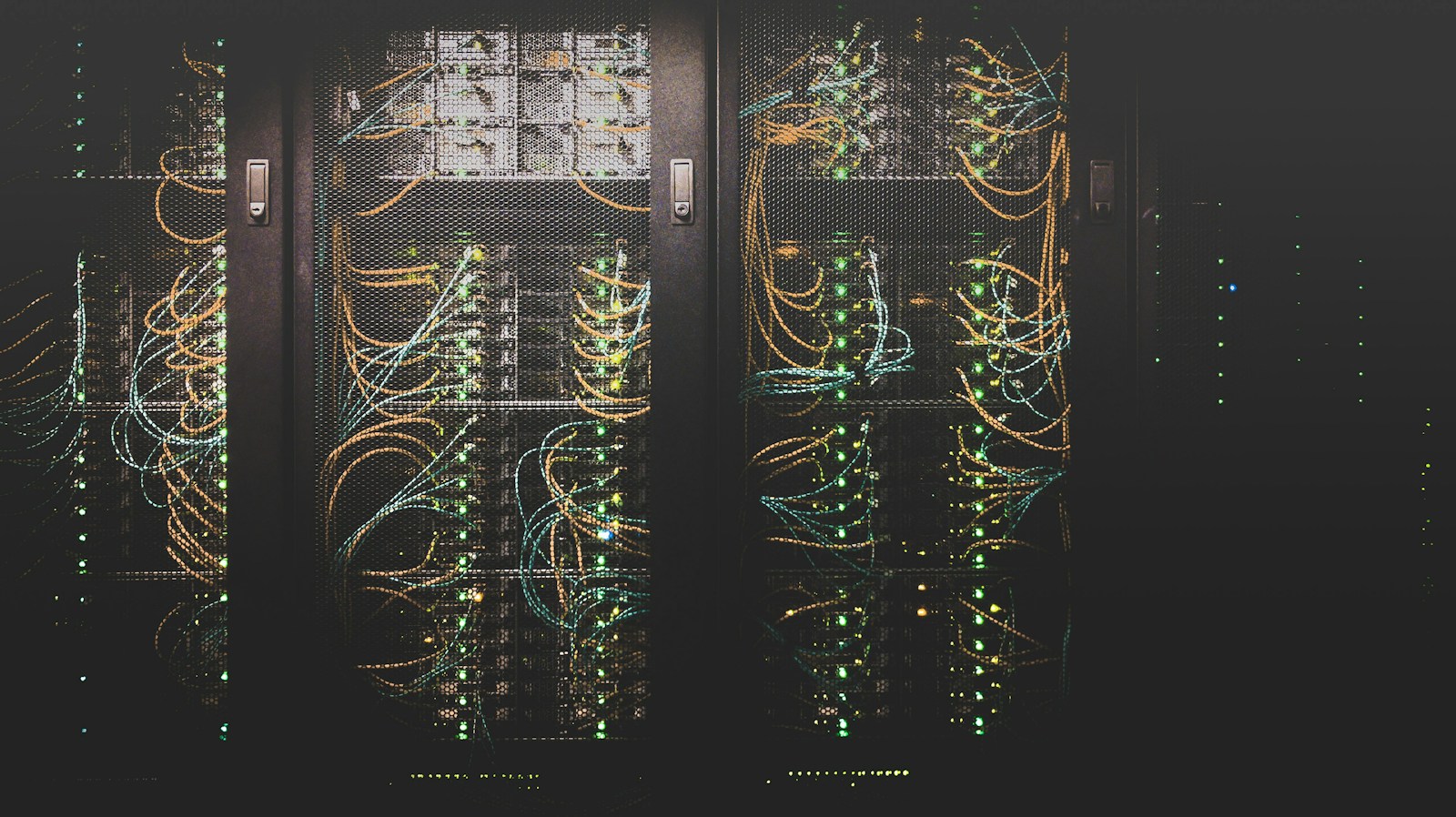
Data centre infrastructure is a major part of the AI investment cycle. Image: Investments Research.
The AI market is not one business
The label “AI stock” covers companies with very different economics. Semiconductor suppliers sell processors, memory and networking equipment. Cloud providers spend heavily on computing capacity and seek to earn a return by renting it to customers. Software companies are adding AI features to existing products, while other businesses are using the technology to improve productivity or build new services.
Each group needs a different set of questions. For a chip supplier, investors should examine customer concentration, product cycles and the risk that customers order more equipment than they ultimately need. For a cloud operator, capital expenditure, depreciation and capacity utilisation are central. For a software company, the important issue is whether AI features increase customer spending, strengthen retention or reduce costs in a measurable way.
The first step in any analysis is therefore simple: identify where the company sits in the value chain and determine how it expects to make money from AI. A compelling product story is a starting point, not proof of an attractive investment.
Revenue growth needs to stand up to scrutiny
Fast growth can signal strong demand, but its source matters. Read the company’s financial statements and management commentary to understand whether sales are coming from recurring customer activity, new customers, higher prices, acquisitions or a small number of large contracts.
Customer concentration deserves particular attention in the AI supply chain. A supplier may report strong orders while relying on only a few large buyers. If one customer delays a data centre project or changes its spending plans, the impact can spread quickly through revenue expectations and investor sentiment.
Investors should also compare revenue with accounts receivable and deferred revenue over several reporting periods. Receivables rising much faster than sales may warrant questions about payment terms and collection timing. Growing deferred revenue can indicate that customers have paid before a service is delivered, although the meaning depends on the business model and accounting policy. No single figure settles the question. The pattern across several quarters is more useful.
Cash flow reveals the cost of growth
Reported earnings are only part of the picture. Companies may present adjusted profit measures that exclude selected expenses, so investors should compare those figures with results prepared under generally accepted accounting principles and with cash generated by the business.
Free cash flow is commonly measured as operating cash flow less capital expenditure. It is not a standardised accounting measure, which means definitions can differ between companies. For businesses building AI infrastructure, spending on servers, buildings, power and networking can absorb a substantial share of operating cash. Revenue can rise rapidly while the cash left for shareholders remains limited.
Stock based compensation also deserves a close look. Although it is not usually a cash payment when recorded, repeated share awards can dilute existing shareholders. Review the expense, the trend in diluted shares and the pace at which earnings per share are growing. A business can increase total profit without delivering the same growth to each share.
A useful review compares revenue growth, operating margins, capital expenditure, operating cash flow and free cash flow across multiple years. This helps show whether expansion is improving the economics of the business or simply requiring ever larger investments.
Look for an advantage that competitors cannot easily copy
Technology leadership can be valuable, but it does not guarantee durable profits. An advantage may come from specialised hardware, proprietary data, customer relationships, distribution, switching costs or an ecosystem that is difficult to replace. Investors should look for evidence that the advantage translates into pricing power, customer retention or stronger margins.
Competition can weaken returns even when the overall market is expanding. Customers may develop their own tools, move workloads between providers or negotiate lower prices. Open source alternatives can also put pressure on products that once appeared difficult to replicate. The key question is not whether a company uses advanced AI, but whether customers have a compelling reason to keep paying it.
Valuation is where a good company can become a poor investment
Even a strong business can disappoint shareholders if its stock price assumes an unrealistic level of future success. Valuation connects the company’s operating prospects with the price an investor must pay today.
Rather than relying on a single optimistic forecast, build three scenarios. A base case should reflect reasonable assumptions about growth, margins and investment needs. A bull case can test what happens if adoption and profitability exceed expectations. A bear case should consider slower demand, lower prices, higher costs or a longer period before the business generates meaningful cash.
For each scenario, examine revenue growth, operating margins, capital spending and the resulting cash flow. Then consider what valuation the market might assign to those results. The aim is not to predict the future precisely. It is to understand which assumptions must prove correct for the current share price to make sense.
Comparisons with other companies can provide context, but ratios such as price to earnings or enterprise value to sales should not be used in isolation. Growth rates, profitability, balance sheet strength and the durability of earnings all influence what a reasonable multiple might look like.
Infrastructure spending creates both opportunity and risk
AI investment extends beyond the companies that design models or manufacture chips. Data centres need power, cooling, networking, construction and reliable equipment. That creates opportunities across a wider industrial supply chain, but it also introduces risks that can be easy to overlook.
Projects can be delayed by power constraints, permitting, equipment shortages or rising construction costs. Infrastructure providers may also face a mismatch between the timing of spending and the timing of customer revenue. Investors should examine project commitments, financing needs and customer contracts rather than assuming that every announced investment will translate into immediate profits.
Large spending plans are evidence of demand expectations, not a guarantee of future returns. The investment case becomes stronger when a company can explain how its spending will be funded, how capacity will be used and what level of return management expects to earn.
A practical framework for investors
Before adding an AI related company to a watchlist, work through five questions:
- Business model: What does the company sell, and who pays for it?
- Financial quality: Are revenue, margins and cash flow improving together?
- Competitive position: What protects the business if competitors cut prices or offer similar products?
- Investment requirements: How much capital is needed to support growth, and what return could it generate?
- Valuation: What must happen for the current share price to deliver an acceptable return?
Revisit these questions after each earnings report. Track changes in management guidance, customer concentration, capital expenditure and cash generation. A clear record of what changed and why is more valuable than reacting to every market headline.
The bottom line
Artificial intelligence may create significant long term business opportunities, but the benefits will not be distributed evenly across the market. Some companies may build lasting advantages, while others face intense competition, high capital requirements or expectations that are difficult to meet.
For investors, the strongest process combines business analysis, careful reading of financial statements and realistic valuation scenarios. The goal is not simply to identify companies connected to AI. It is to determine which businesses can turn demand into durable economic value and whether the price offers enough room for uncertainty.
Research note: This article is for informational and educational purposes only. It is not personal investment advice, a recommendation to buy or sell any security, or a forecast of future performance. Investors should conduct their own research and consider their financial circumstances and risk tolerance.