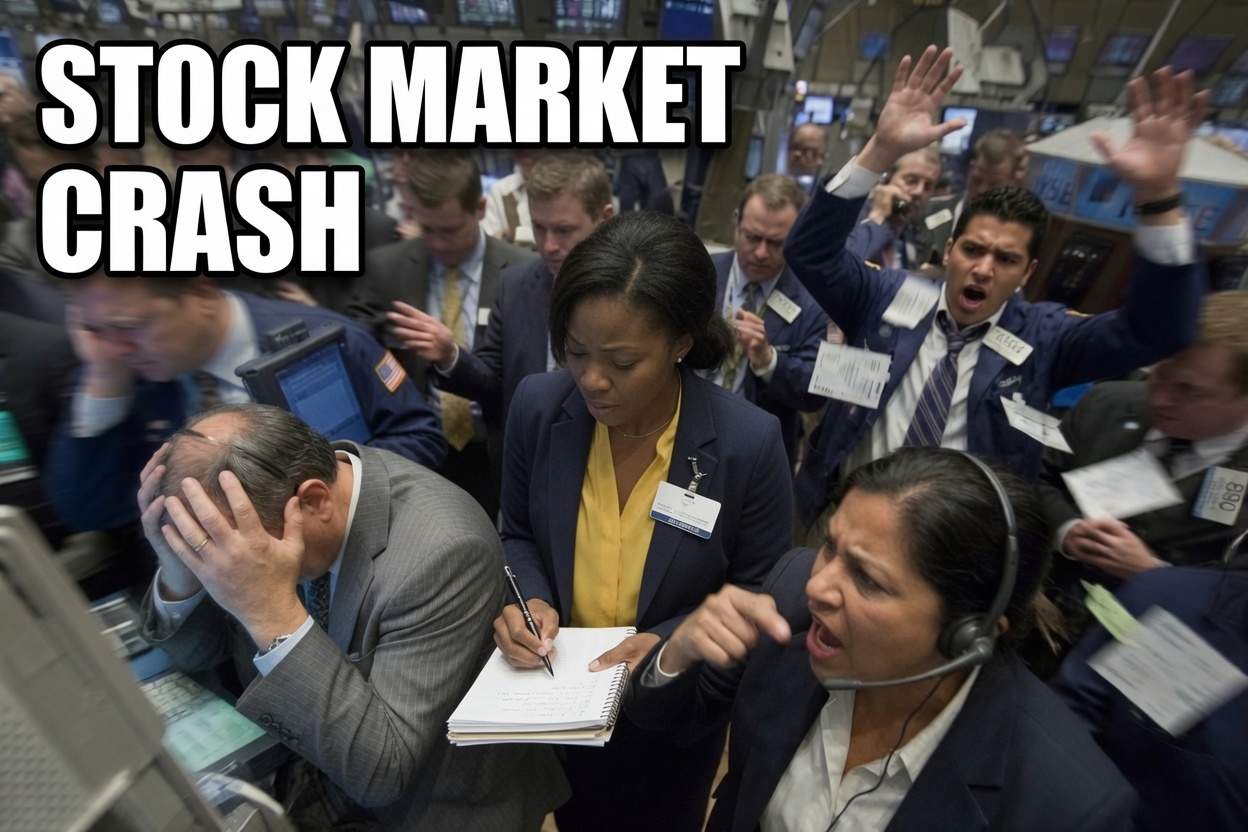
Market Analysis & Equity Research | Event: June 5, 2026 Global Selloff
On Friday June 5, 2026, global financial markets suffered one of their most severe and broadly correlated selloffs in recent memory. Equities, bonds, gold, silver, oil, and cryptocurrency all declined simultaneously in a violent risk-off move that ended Wall Street’s longest winning streak in three years and wiped trillions from global market capitalisation in a single session. This is a full data-driven breakdown of what happened, what caused it, and what comes next.
At a Glance: Key Market Data of June 5, 2026
U.S. Equity Indices
| Index | Close | Change (Points) | Change (%) | Note |
|---|---|---|---|---|
| S&P 500 | 7,383.74 | -200.57 | -2.6% | Worst day since October 2025 |
| Dow Jones Industrial Average | 50,866.78 | -695.15 | -1.3% | Nine-week win streak snapped |
| Nasdaq Composite | 25,709.43 | -1,121.53 | -4.2% | Worst day since April 2025 |
| Nasdaq-100 | 28 957,60 | -1 450,21 | -4.77% | AI and chip names led lower |
| Philadelphia Semiconductor Index | 12.220,76 | -1.396,74 | -10.26% | Worst two-day stretch of 2026 |
| Russell 2000 | 2.833,50 | -101,83 | -3.47% | Small caps also caught in selloff |
| VIX Fear Index | Above 21 | +6,11 | +34% | Highest level in two months |
Global Indices
| Index | Country | Change (%) | Note |
|---|---|---|---|
| Kospi | South Korea | -5.54% | Worst performer globally |
| Kosdaq | South Korea | -4.50% | Small caps hit hard |
| Nikkei 225 | Japan | Sharply lower | AI and semiconductor contagion |
| DAX | Germany | -0.3% at open | Growth and semiconductor exposure |
| FTSE 100 | United Kingdom | -0.4% at open | Relatively resilient, value-heavy |
| CAC 40 | France | Mixed | Luxury and cyclical stocks weighed |
| IBEX 35 | Spain | +0.3% at open | Defensive sectors buffered losses |
Multi-Asset Performance
| Asset Class | Change (%) | Note |
|---|---|---|
| S&P 500 | -2.6% | Equity |
| Nasdaq Composite | -4.2% | Equity |
| Philadelphia Semiconductor Index | -8.8% | Equity |
| Gold | -3.5%+ | Precious metal |
| Silver | -8%+ | Precious metal |
| Crude Oil (WTI) | -3.0% | Commodity |
| Bitcoin | -5%+ | Crypto, fell below $60,000 |
| U.S. 10-Year Treasury Yield | +7 bps to 4.54% | Bond yields rose as prices fell |
| U.S. 2-Year Treasury Yield | +11 bps to 4.16% | Highest since early 2025 |
The Three Triggers That Broke the Market
Trigger 1 : The Jobs Report Nobody Wanted to Be This Good
At 8:30 AM Eastern, the U.S. Bureau of Labor Statistics released the May nonfarm payrolls report. The economy added 172,000 jobs in May, roughly double the 88,000 economists had forecast. The unemployment rate held steady at 4.3%.
| Metric | Forecast | Actual | Verdict |
|---|---|---|---|
| Nonfarm Payrolls (May 2026) | ~88,000 | 172,000 | Massive beat |
| Unemployment Rate | 4.3% | 4.3% | In line |
| Fed Rate Hike Probability (Dec 2026) | ~35% before report | ~70% after report | Sharply repriced |
In any other market environment a blowout jobs number would be celebrated. On June 5, 2026, it was the worst possible news. A resilient labor market raises the prospect that inflation remains sticky, which forces the Federal Reserve to keep rates higher for longer or even hike again. That prospect immediately repriced risk across every asset class simultaneously.
Trigger 2 : Broadcom Lit the Fuse in Semiconductors
Earlier in the week, Broadcom reported earnings and left its full-year AI chip targets unchanged, falling short of the elevated expectations investors had baked into semiconductor valuations. The market read this as a signal that AI chip demand may be plateauing. The damage cascaded across the entire semiconductor complex over two sessions.
| Stock | Ticker | 1-Day Change | 2-Day Change | Note |
|---|---|---|---|---|
| Broadcom | AVGO | -6.8% | -15%+ | Earnings catalyst |
| Nvidia | NVDA | -6.2% | — | World’s largest company threatened with loss of $5T market cap |
| AMD | AMD | -6.3% | -12.6% | Heavy two-session losses |
| Qualcomm | QCOM | -11% | — | Severe single-day decline |
| Micron Technology | MU | -6.3% | -17% | Worst two-day performance |
| Marvell Technology | MRVL | -8% | — | AI memory names sold off broadly |
| Intel | INTC | — | -9% | Two-session decline |
| ASML | ASML | -3.8% | — | European chip equipment hit |
| Infineon Technology | IFX | -6%+ | — | German chipmaker caught in rout |
The Philadelphia Semiconductor Index dropped 8.8% on Friday alone and 12% from its Tuesday close, its worst two-day stretch of 2026.
Trigger 3 The Iran War Inflation Premium
Underlying all of the above is a geopolitical backdrop that has kept inflation elevated throughout 2026. The ongoing conflict with Iran has disrupted flows through the Strait of Hormuz and driven an oil price spike that fed directly into U.S. inflation data. That elevated inflation backdrop is precisely what made the strong jobs report so dangerous: a hot labor market plus sticky inflation equals a Federal Reserve with no room to cut and every reason to consider hiking.
The Rare Correlated Selloff When Everything Falls Together
What made June 5 extraordinary was not just the size of individual declines but the fact that every major asset class fell simultaneously. This almost never happens under normal market conditions.
| Asset | Normal Crisis Behavior | June 5, 2026 Behavior |
|---|---|---|
| Equities | Fall | Fell sharply |
| Gold | Rise (safe haven) | Fell 3.5%+ |
| Silver | Rise or neutral | Fell 8%+ |
| U.S. Treasury Bonds | Rise (flight to safety) | Fell (yields rose) |
| Crude Oil | Variable | Fell 3% |
| Bitcoin | Variable | Fell 5%+ |
| U.S. Dollar | Neutral to rise | Strengthened broadly |
When everything sells at once and even traditional safe havens like gold and government bonds decline alongside equities, it signals institutional deleveraging rather than a rotation. Large portfolio managers reducing overall risk exposure simultaneously, often triggered by margin calls, produce exactly this kind of correlated selloff. The dollar strengthened across the board as emerging market currencies and bonds came under significant pressure.
Global Contagion Map
Asia-Pacific
South Korea bore the worst of the Asian damage. The Kospi ended the session 5.54% lower at 8,160.59. Samsung Electronics fell 6.40% and SK Hynix collapsed 9.92%. The Kosdaq small-cap index dropped 4.50%. The country’s labor minister added to pressure by urging South Korea’s biggest technology companies to distribute more gains from the AI-driven semiconductor boom an unwelcome policy signal for investors already selling the sector.
Japan’s Nikkei 225 also fell sharply. In Tokyo, investors watching electronic quotation boards saw widespread red across semiconductor and AI-adjacent names that mirrored Wall Street’s losses from the previous session.
Europe
European markets opened with mixed sentiment following the Asian carnage but quickly deteriorated. The divergence between European indices reflected their underlying composition.
| Index | Change | Why |
|---|---|---|
| DAX (Germany) | Negative | High exposure to semiconductors, autos, and growth stocks |
| CAC 40 (France) | Mixed to negative | Luxury goods and cyclicals weighed |
| FTSE 100 (UK) | -0.4% | Partially buffered by energy and financial value stocks |
| IBEX 35 (Spain) | +0.3% | Heavily weighted to defensives, financials, and consumer staples |
Why Did Gold Fall? The Safe Haven Paradox Explained
Gold’s 3.5%+ decline on a day of widespread fear was the most counterintuitive element of the session and requires a direct explanation.
There are two mechanisms at work. First, when rate hike expectations surge, the opportunity cost of holding non-yielding assets like gold rises sharply. Gold pays no interest or dividend. In a world where 2-year Treasury yields climb to 4.16% and rate hikes are being actively priced, capital flows away from gold toward yield-bearing alternatives. Second, in a forced-deleveraging environment, gold is liquidated to meet margin calls in other parts of a portfolio. The traditional inverse relationship between gold and equities breaks down entirely when the driver of selling is not fear but forced position reduction.
Silver’s 8%+ decline was even more severe because silver carries both monetary and industrial demand characteristics. Fears of slowing economic activity from higher rates hit the industrial demand component at the same time the monetary safe-haven bid was evaporating.
Context: Nine Weeks of Gains Made the Fall Inevitable
| Metric | Data |
|---|---|
| S&P 500 consecutive winning weeks before June 5 | 9 (longest streak since 2023) |
| S&P 500 year-to-date gain heading into Friday | +7.9% |
| Nasdaq year-to-date gain heading into Friday | +12%+ |
| Philadelphia Semiconductor Index gain before pullback | Significant double-digit gains in 2026 |
| Last time S&P 500 had a losing week | Approximately 10 weeks prior |
Analysts and portfolio managers largely agreed the selloff was not structurally shocking given the scale of prior gains. The semiconductor index had posted massive gains in recent months as investors piled into AI-related names. Valuations were stretched. All that was needed was a catalyst, and two arrived at once.
What the Strategists Said
Ryan Detrick, Chief Market Strategist, Carson Group:
“After the record run we’ve seen the last nine weeks in equities, specifically tech and semiconductors, the dam just broke today. Obviously, the stronger-than-expected jobs report puts the Fed in a tough spot regarding any interest rate cut for the rest of the year. And the market is throwing a fit by hitting the big winners so far this year.”
Ohsung Kwon, Chief Equity Strategist, Wells Fargo:
“The market reaction today was more driven by positioning rather than fundamentals. The semiconductor sector was way overbought. That is why we are seeing the selloff. I don’t think it is the end of the semi bull market.”
Forward Outlook: Three Scenarios for Investors
Scenario A : Healthy Correction, Bull Market Intact
If AI chip demand proves resilient and the Federal Reserve signals it will hold rates steady rather than hike, Friday’s selloff would be classified as a healthy correction within an ongoing bull market. Many strategists expect buyers to return given the strong underlying earnings growth of major technology companies. Pullbacks of this magnitude have historically been buying opportunities within multi-year AI infrastructure buildouts.
Probability assessment: Moderate. Depends heavily on upcoming Nvidia and AMD earnings guidance and the next CPI print.
Scenario B : Rates Stay Higher for Longer, Tech Multiples Compress
If the Federal Reserve signals at its next meeting that rate cuts are off the table and a hike remains possible, growth stock valuations across technology and semiconductors would need to reprice significantly lower. The 70% probability of a December rate hike currently priced by markets would push that repricing into the open.
Probability assessment: Elevated given the current data trajectory. The May jobs report was not a one-off data point but part of a trend of labor market resilience alongside stubborn inflation from the Iran conflict.
Scenario C : AI Demand Plateau Confirmed
If Broadcom’s cautious guidance is confirmed by upcoming earnings from Nvidia and other semiconductor names, the AI-driven rally that powered markets through most of 2025 and 2026 would face a genuine fundamental challenge. This scenario would likely produce a more sustained and broader market correction rather than a quick recovery.
Probability assessment: Lower but not negligible. The market will have direct evidence from Nvidia’s next earnings report.
Key Upcoming Events to Watch
| Date | Event | Market Relevance |
|---|---|---|
| Mid-June 2026 | U.S. CPI Inflation Data | Confirms or denies the sticky inflation narrative |
| June 2026 | Federal Reserve Meeting / Communications | Rate hike signals will set market direction |
| Next earnings cycle | Nvidia, AMD earnings guidance | Key test of AI chip demand thesis |
| Ongoing | U.S.-Iran talks / Strait of Hormuz | Oil prices and inflation premium |
| Late June 2026 | SpaceX IPO (largest-ever expected) | Potential liquidity draw from tech names |
Summary Scorecard
| Category | Verdict |
|---|---|
| Session severity | Worst since October 2025 |
| Primary trigger | U.S. May jobs report: 172,000 jobs vs 88,000 forecast |
| Secondary trigger | Broadcom AI chip guidance miss |
| Geopolitical backdrop | Iran war inflation premium |
| Correlated selloff | Yes : equities, gold, silver, oil, bonds, crypto all fell |
| Nine-week winning streak | Broken |
| VIX | +34%, above 20 for first time in two months |
| Bull market status | Intact but under pressure |
| Biggest equity loser | Philadelphia Semiconductor Index (-8.8%) |
| Biggest commodity loser | Silver (-8%+) |
| Biggest country loser | South Korea Kospi (-5.54%) |
| Fed rate hike probability | Approximately 70% by December 2026 |
Disclaimer: This article is for informational and educational purposes only. It does not constitute investment advice or a recommendation to buy or sell any security. All data is sourced from publicly available reports as of June 5 to 6, 2026. Investors should conduct their own due diligence and consult a qualified financial adviser before making investment decisions. Past performance is not indicative of future results.